Urial
Ovis vignei
Taxonomy
About
Frequently Asked Questions
- The scientific name of Urial is Ovis vignei.
- The Urial has a conservation status of Vulnerable.
- Urial belongs to the kingdom Animalia.
- Urial belongs to the phylum Chordata.
- Urial belongs to the class Mammalia.
- Urial belongs to the order Artiodactyla.
- Urial belongs to the family Bovidae.
- Urial belongs to the genus Ovis.
What is the scientific name of Urial?
What is the conservation status of Urial?
What kingdom does Urial belong to?
What phylum does Urial belong to?
What class does Urial belong to?
What order does Urial belong to?
What family does Urial belong to?
What genus does Urial belong to?
In the News
Ancient Siberian tomb reveals surprising secrets of cannabis use 2,800 years ago
Scientists investigating a 2,800-year-old Siberian tomb discovered roughly 1,000 cannabis seeds and chemical evidence suggesting ancient Scythians used the plant for its intoxicating effects. The remarkable find, surrounded by evidence of elaborate burial rituals and animal sacrifices, offers the oldest directly dated archaeological evidence of psychoactive cannabis use.
ScienceDaily Plants & Animals · 11/8/2026
Archaeologists discover 1,200-year-old mummified hairless dog in Peru
Archaeologists have discovered 1,200-year-old remains of Peru’s famous hairless dogs at an ancient Wari Empire burial site, including remarkably preserved mummies and puppies buried alongside humans. Their unusual teeth, diets, and burial arrangements reveal surprising clues about how ancient Peruvians cared for, bred, and sometimes discarded their dogs.
ScienceDaily Plants & Animals · 10/18/2026
At Conservation Burial Grounds, People and Birds Find a Shared Sanctuary
Just west of the Houston metropolis, the Katy Prairie Preserve hosts more than 300 native bird species. Among the 20,000 acres of Texas grassland, wetland, and working land is an unusual site, called...
Audubon · 9/21/2026
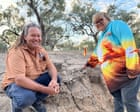
Signs of ‘feeding’ ritual at dingo burial site shed new light on bond between First Nations people and canines
Never documented archaeologically before, evidence points to First Nations people caring for and nursing the animal Get our breaking news email, free app or daily news podcast The discovery of a millennium-old dingo burial site in western New South Wales, including evidence of a “feeding” ritual never before documented archaeologically, has shed new light on the longstanding relationship between the canines and First Nations people. The dingo was buried along the Baaka, or Darling River, in Kinchega national park near the Menindee Lakes. Continue reading...
The Guardian Environment · 5/18/2026

Whose map counts in conservation?
For many conservation decisions, the most contested question is also the most basic: what belongs on the map? A forest may appear on a satellite image as intact canopy. To people who live near it, the same forest may be a hunting ground, a burial site, a medicine cabinet, a route to school, a […]
Mongabay · 5/14/2026