Queen
Danaus gilippus
Taxonomy
About
Frequently Asked Questions
- The scientific name of Queen is Danaus gilippus.
- The Queen has a conservation status of Least Concern.
- Queen belongs to the kingdom Animalia.
- Queen belongs to the phylum Arthropoda.
- Queen belongs to the class Insecta.
- Queen belongs to the order Lepidoptera.
- Queen belongs to the family Nymphalidae.
- Queen belongs to the genus Danaus.
What is the scientific name of Queen?
What is the conservation status of Queen?
What kingdom does Queen belong to?
What phylum does Queen belong to?
What class does Queen belong to?
What order does Queen belong to?
What family does Queen belong to?
What genus does Queen belong to?
In the News

Mali’s ‘Moringa Queen’ wins UN recognition for restoring degraded land
Rokiatu Traoré, president of a social enterprise in Mali that uses agroforestry to restore degraded land and create jobs for women and youths, has been named a Changemaker at the United Nations’ Sustainable Development Goals Action Awards. “I work in Mali, where lands are becoming drier every year. Many farmers struggle with degraded soil, smaller […]
Mongabay · 11/5/2026
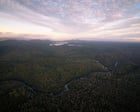
‘Worldwide legacy’: almost $20m raised to protect majestic tract of land in far north Queensland
Bush Heritage hopes to buy Wooroora station, which links wet sclerophyll forest and savanna woodland and is home to 12 endangered species Get our breaking news email, free app or daily news podcast A majestic tract of land in far north Queensland that links wet tropics and world heritage rainforest, and contains headwaters that flow to the Great Barrier Reef, could be bought and protected by Christmas, after a conservation group raised more than $19m in private donations to buy the cattle station. Wooroora spans more than 20,000 hectares of largely intact wet sclerophyll forest and savanna woodland on the lands of the Jirrbal people about 100km south-west of Cairns – and borders Bush Heritage’s existing 43,575-hectare Yourka Reserve in one of the most biodiverse regions in Australia. Continue reading...
The Guardian Environment · 10/28/2026

In Australia’s Wet Tropics, restoration misses the forest for the tree cover
Relics of ancient wet forests stretch across the coast of Queensland state in Australia. In a landscape made patchwork by agriculture, volunteers, community groups and Indigenous rangers in Australia’s Wet Tropics now grow more than 300,000 native plants to turn cleared pasture back into rainforest. But once the young trees shade out the weeds, some […]
Mongabay · 10/6/2026

Uganda and NGO to co-manage sector of national park home to tree-climbing lions
The Uganda Wildlife Authority (UWA) and the Wildlife Conservation Society (WCS) have signed a 10-year agreement to co-manage a portion of Queen Elizabeth National Park, famous for its tree-climbing lions. WCS will take over some day-to-day roles for the Ishasha Sector in the south of the park, including those covering biodiversity management, community engagement and […]
Mongabay · 10/2/2026
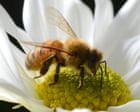
More than 800,000 bees stolen across far north Queensland in ‘sophisticated’ operation
Apiarists will lose not just the insects but the value of pollination contracts, which can be worth thousands of dollars Follow our Australia news live blog for latest updates Get our breaking news email, free app or daily news podcast An estimated 800,000 bees, worth tens of thousands of dollars, have been stolen from properties in far north Queensland. The industry is already reeling from the this month’s arrival of the varroa mite parasite. Continue reading...
The Guardian Environment · 9/21/2026
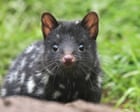
Outfoxed: How well do you know your native animals? Australians’ questionable quoll knowledge exposed
About one in six NSW, QLD and Vic residents think foxes are native animals and a third believe quolls are introduced, survey shows Get our breaking news email, free app or daily news podcast Most people identify wombats and kangaroos as Australian animals, but one in six people surveyed in Queensland, New South Wales and Victoria think red foxes are native wildlife. The polling commissioned by the Invasive Species Council also revealed that one in three Australians on the east coast did not know that quolls were native. Continue reading...
The Guardian Environment · 9/20/2026