Gray Wolf
Canis lupus
Taxonomy
About
Frequently Asked Questions
- The scientific name of Gray Wolf is Canis lupus.
- The Gray Wolf has a conservation status of Least Concern.
- Gray Wolf belongs to the kingdom Animalia.
- Gray Wolf belongs to the phylum Chordata.
- Gray Wolf belongs to the class Mammalia.
- Gray Wolf belongs to the order Carnivora.
- Gray Wolf belongs to the family Canidae.
- Gray Wolf belongs to the genus Canis.
What is the scientific name of Gray Wolf?
What is the conservation status of Gray Wolf?
What kingdom does Gray Wolf belong to?
What phylum does Gray Wolf belong to?
What class does Gray Wolf belong to?
What order does Gray Wolf belong to?
What family does Gray Wolf belong to?
What genus does Gray Wolf belong to?
In the News
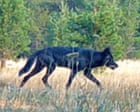
California confirms rare sighting of gray wolf in Mendocino national forest
Officials say sighting a sign species – driven to extinction in state before reintroduction in 2011 – expanding its range A gray wolf has recently been seen in California’s Mendocino national forest for the first time since the species returned to the state 15 years ago, state wildlife officials confirmed. Officials in Lake county, which is about two hours north of San Francisco, said last week the California department of fish and wildlife (CDFW) had received reports of sightings in the forest in late August. The agency verified the presence of a wolf in the far north end of the county, county supervisor Brad Rasmussen said in a statement on social media. Continue reading...
The Guardian Environment · 9/8/2026

How snow leopards, wolves and leopards share the same Himalayan valley, study
Three of Asia’s most formidable predators share territory in a remote Nepal valley by eating different prey, according to a new study. Researchers found that diet, not time or space, is what keeps snow leopards (Panthera uncia), common leopards (Panthera pardus), and Himalayan wolves (Canis lupus chanco) from coming into direct conflict. The study, published […]
Mongabay · 6/26/2026

How leopards and wolves share the same Himalayan valley, study
Three of Asia’s most formidable predators share territory in a remote Nepal valley by eating different prey, according to a new study. Researchers found that diet, not time or space, is what keeps snow leopards (Panthera uncia), common leopards (Panthera pardus), and Himalayan wolves (Canis lupus chanco) from coming into direct conflict. The study, published […]
Mongabay · 6/25/2026