Bleak
Alburnus alburnus
Taxonomy
About
Frequently Asked Questions
- The scientific name of Bleak is Alburnus alburnus.
- The Bleak has a conservation status of Least Concern.
- Bleak belongs to the kingdom Animalia.
- Bleak belongs to the phylum Chordata.
- Bleak belongs to the class Actinopterygii.
- Bleak belongs to the order Cypriniformes.
- Bleak belongs to the family Leuciscidae.
- Bleak belongs to the genus Alburnus.
What is the scientific name of Bleak?
What is the conservation status of Bleak?
What kingdom does Bleak belong to?
What phylum does Bleak belong to?
What class does Bleak belong to?
What order does Bleak belong to?
What family does Bleak belong to?
What genus does Bleak belong to?
In the News

Far-right election results in Brazil ‘bleak’ for Indigenous peoples, says Indigenous leader
Right-wing candidates made big gains in both houses of Congress in Brazil’s Oct. 4 general election. Brazil’s main Indigenous organization, the Articulation of Indigenous Peoples of Brazil APIB, told Mongabay that the result will drive new attempts to strip constitutional protections from Indigenous peoples. “Unfortunately, what we saw today is, let’s say, a bleak moment,” […]
Mongabay · 10/6/2026
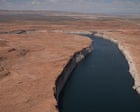
Lake Powell, a vital reservoir, plunges toward unprecedented low levels as water crisis deepens in US west
Experts say the critical reservoir system is careening toward a breaking point as the US west’s climate warms and dries Lake Powell, the US’s second-largest reservoir, threatens to plunge to unprecedentedly low levels this year after a historically bleak snowpack failed to raise its water level, scientists and water experts have said, adding renewed urgency to stalled talks over how to conserve a water source depended on by tens of millions of people in the US south-west. The 185-mile Colorado River reservoir currently stands at about 22% of its capacity, or roughly 5.6m acre-feet. Lake Powell fell below that level for a few months three years ago. But those 2023 levels were recorded in the winter, when the reservoir, which straddles the Utah-Arizona border, hits its lowest ebb. Spring runoff carried the level back up to 9.6m acre-feet by June, according to data from the US Bureau of Reclamation. Continue reading...
The Guardian Environment · 7/7/2026