apple
Malus domestica
Taxonomy
About
Frequently Asked Questions
- The scientific name of apple is Malus domestica.
- apple belongs to the kingdom Plantae.
- apple belongs to the phylum Tracheophyta.
- apple belongs to the class Magnoliopsida.
- apple belongs to the order Rosales.
- apple belongs to the family Rosaceae.
- apple belongs to the genus Malus.
What is the scientific name of apple?
What kingdom does apple belong to?
What phylum does apple belong to?
What class does apple belong to?
What order does apple belong to?
What family does apple belong to?
What genus does apple belong to?
In the News

Cop31 must deliver climate progress that people can see is real, host says
High-stakes talks involving 190 countries begin on Monday as world grapples with El Niño supercharged by fossil fuels The Cop31 summit must produce progress, “a tangible outcome ... that people can see is real”, its host has said as scores of world leaders and representatives of close to 190 countries gather in Turkey for the UN climate talks. The high-stakes meeting begins on Monday, as countries around the world grapple with the strongest El Niño weather system on record, supercharged by fossil fuels, which is set to take hundreds of thousands of lives and cause damage costing trillions of dollars. Continue reading...
The Guardian Environment · 11/8/2026

Leaders grapple with finance and harmful subsidies at UN’s COP17 biodiversity conference
YEREVAN, Armenia — Visitors entering the main hallway of the 2026 U.N. biodiversity conference (COP17) encounter a mural of a herd of elephants. The installation, led by the NGO Friends of the Earth International, doesn’t celebrate the gains that some elephant populations have made in recent decades. Instead, it uses the “elephants in the room” […]
Mongabay · 10/31/2026

A town-wide ‘living laboratory’ shows how green spaces can combat climate extremes
Stoke Park is a natural haven in a busy British town. Centered in Guildford, Surrey, its rolling fields pop with wildflowers in the spring; birds sing and ducks paddle serenely in a pond beside ornamental gardens; and the sun casts dappled shade on the grass from oak, spruce and beech trees, scattered across 52 hectares […]
Mongabay · 10/28/2026

Sustainable silvopasture is popular with US farmers despite waning financial supports
VERSHIRE, Vermont – When Sabra Ewing and Sebastian Lousada bought a tired dairy farm with pastures featuring old apple trees alongside sprouting maples, it was obvious that the grass below these trees’ crowns was a lot lusher than in the open. Then they noticed their sheep began to prefer those shady spots, and their manure […]
Mongabay · 10/21/2026
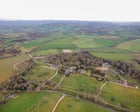
How a South African billionaire is turning a corner of Somerset into ‘one man’s estate’
Koos Bekker’s Newt estate encompasses luxury hotels, pubs and high street business, with local concerns including flooding When South African billionaire Koos Bekker bought an old country estate in a sleepy corner of Somerset to turn it into a luxury hotel, residents thought it was a sign their area was on the up. Walking through his peaceful manicured gardens, which feature a maze of apple trees twisted into perfect shapes using the espalier method, it’s easy to feel that all is well in this quiet, picturesque pocket of England. Continue reading...
The Guardian Environment · 10/10/2026
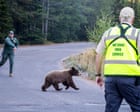
Grizzly reality: US states grapple with uptick in encounters between bears and humans
Bears are increasingly entering places where humans live in the US, forcing wildlife workers to make tough decisions Dan Thompson, supervisor of the large carnivore section of the Wyoming game and fish department, enjoys the field work of capturing mountain lions, wolves, black bears and grizzly bears to study them. “I have always been personally intrigued with carnivores and their role throughout any ecosystem,” Thompson said. “I actually feel very fortunate to get paid to do what we do.” Continue reading...
The Guardian Environment · 9/27/2026