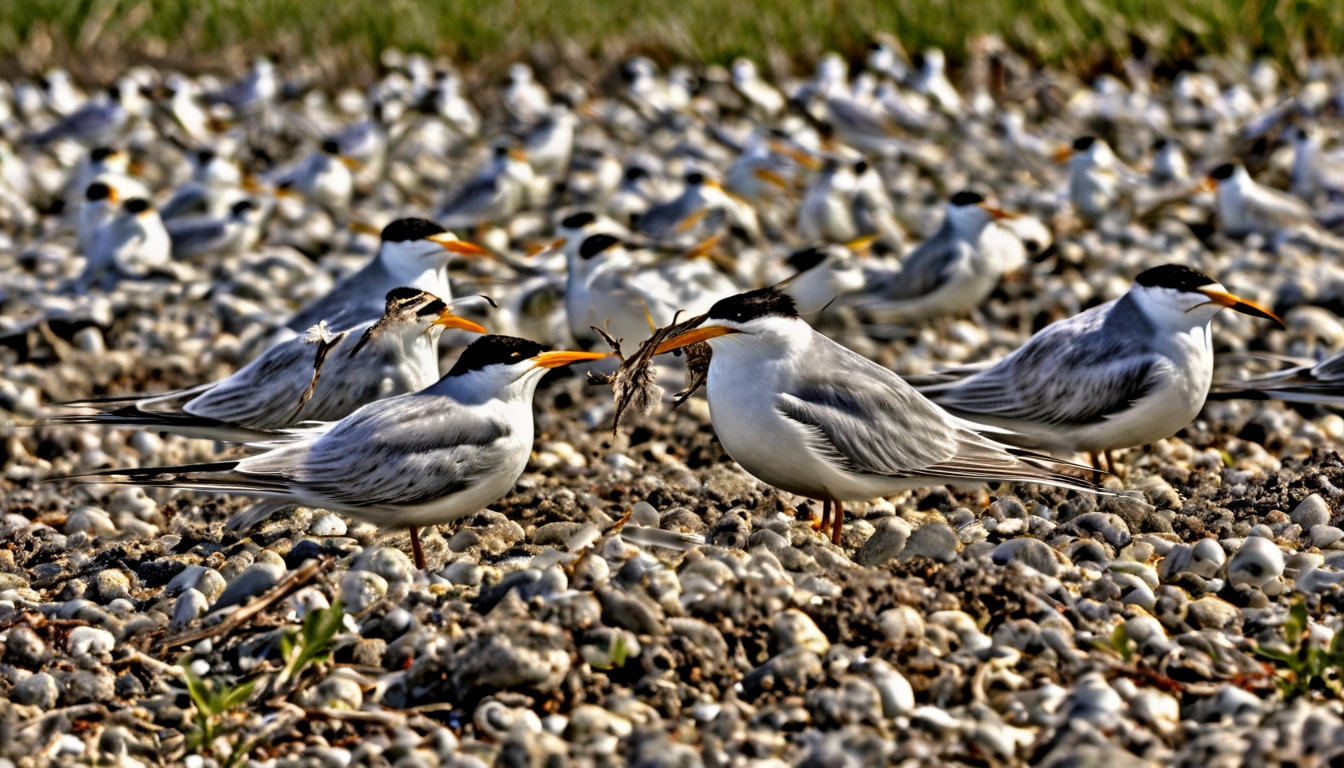

Understanding the Nesting Challenges of Least Terns
This article from Audubon covers the nesting habits and challenges faced by Least Terns, small seabirds that rely heavily on coastal landscapes for raising their young. As these birds attempt to carve out niches in their coastal habitats, they encounter a range of environmental challenges.
Key Challenges for Least Terns
- Habitat Dependency: Least Terns nest in large colonies on sandy beaches, which are essential for their breeding success. However, these habitats are increasingly threatened by various factors.
- Human Encroachment: The expansion of human activities along coastlines, including tourism and development, poses significant threats to the nesting sites of Least Terns. These activities can lead to habitat degradation and disturbance, making it difficult for the birds to thrive.
- Environmental Threats: Pollution and climate change also play a role in diminishing the quality of these coastal habitats. Rising sea levels and increased storm frequency can wash away nests, while pollution can affect the health of both the birds and the ecosystem.
- Conservation Efforts: Efforts to protect and restore coastal habitats are crucial for the survival of Least Terns. Conservationists are working to manage and secure these areas, ensuring they remain safe and suitable for nesting.
The article highlights the intricate balance that Least Terns require to successfully breed and raise their offspring. As these challenges continue to evolve, understanding and supporting conservation efforts becomes ever more critical.
To learn more about how these birds are adapting and the ongoing efforts to protect them, you can read the full article on Audubon's site.
Share this post:
Comments
No comments yet. Be the first!
Sign in to leave a comment.